- Products
SensorsMicrophone kitEar simulatorMouth SimulatorShakerPreamplifiersSpeed SensorsSensor AccessoriesMeasurement microphoneArtificial MastoidPlane SourceVibration SensorsSimulator HeadCalibratorDynamic ForceInstrumentsPM SerialsLR SerialU SerialsN SerialsWind Noise SimulatorSound Level MetersRotary tablesSoftwaresBuildGoAudioExpertVQBenchStingerSIO LabMagnumBT LabSignalBenchAccessoriesAuxiliary InstrumentsAnechoic ChambersCablesInstallation kits
- Solutions
- Technology
- About Us
-
 CN
CN
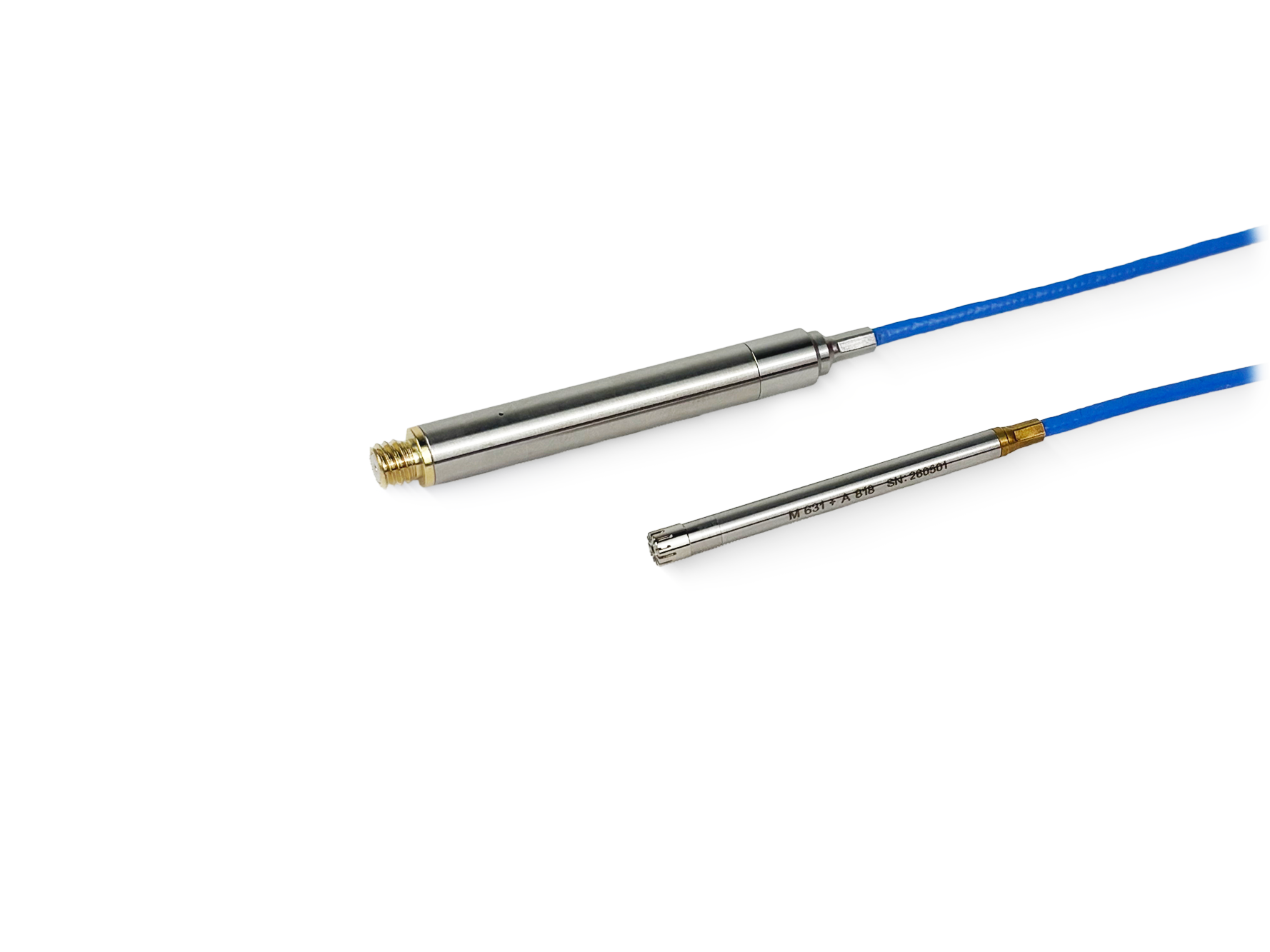
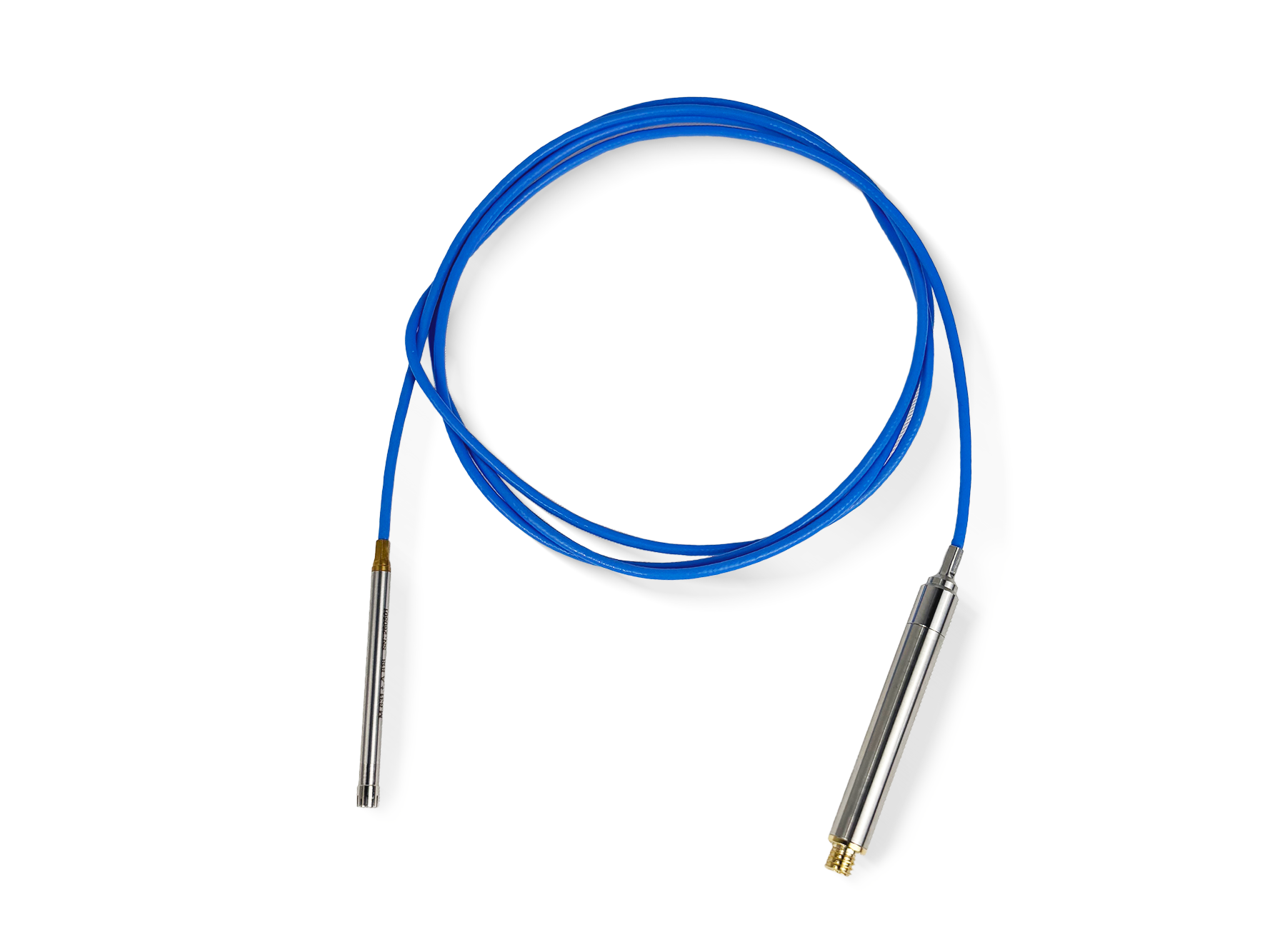
Description
Specifications
Types of Acoustic Fields | Pressure Field |
| Polarization | 0V(Pre polarized) |
Sensitivity mV/Pa(dBV/Pa) | 0.8mV/Pa(-62dB ±3dB) |
Frequency range | 10Hz-20KHz ±2dB |
Dynamic range | 60dBA- 175dB |
Background noise | <60dBA |
Typical capacitance | 3.0 pF |
Temperature range | -10℃ - 50℃ |
Temperature coefficient | -20~60°C,ΔSPL < −0.003 dB (at 250 Hz, reference temperature: 23 °C) |
Humidity coefficient | 20% ~ 90% RH, ΔSPL < -0.003 dB (at 250 Hz, reference temperature 40°C, reference RH 50%) |
Storage conditions | Temperature: 25 °C ±5 °C RH: 50% ±15% RH (for long-term stability) |
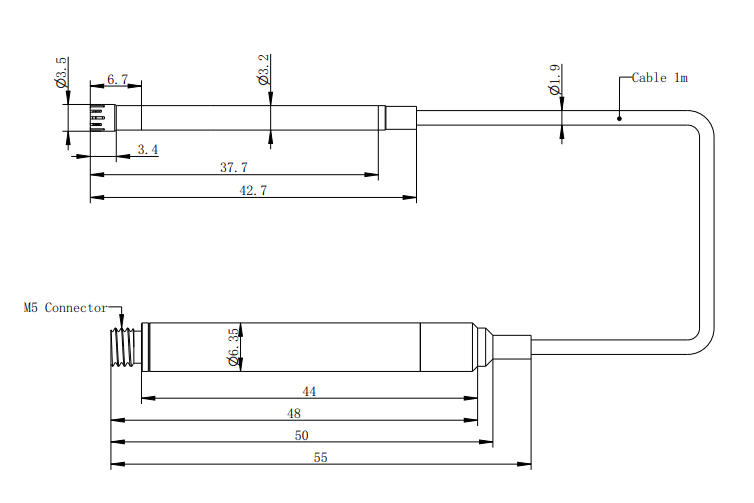
Dimensions
The measuring microphones we produce are precision sensors, and all aspects related to production are strictly controlled, including material selection, production processes, testing control, and production environment.
|
 We adopt advanced production processes and fully automated precision machining equipment, which significantly reduces the accuracy errors caused by secondary clamping in traditional machining equipment. This greatly enhances the dimensional consistency, geometric accuracy, and overall quality stability of the products, providing reliable technical support for demanding application scenarios. |
 At the same time, we employ extremely rigorous testing and control measures, conducting quantitative testing on any links that may lead to product quality issues, and implementing test sequence control to prevent skip-station situations. The comprehensive MES control enables all data to be traceable, ensuring a high degree of consistency in sensor quality. |
 The entire production process of all our microphones is strictly carried out in a dust-free workshop, which can minimize the amount of dust in the air, thus creating a stable and pure working environment for the sensors. This ensures a long and stable lifespan for the sensors and maintains their excellent performance throughout daily use. The entire production process of all our microphones is strictly carried out in a dust-free workshop, which can minimize the amount of dust in the air, thus creating a stable and pure working environment for the sensors. This ensures a long and stable lifespan for the sensors and maintains their excellent performance throughout daily use. |

Download
About Us
Products
Solutions
Technology
Join Us
Contact Us

Copyright © 2014 MegaSig. All rights reserved. 版权所有 粤ICP备15009411号
